Looking for a room for a photo shoot, podcast recording, or a workshop? Booquela's search engine will help you find the right space in moments.
Start from the homepage
On the homepage you'll find a search bar - type in the city where you're looking for a space. You can also click Search in the top menu to go straight to the full search page.
Imagine you're planning a product shoot in Krakow. You type "Krakow" and Booquela shows you all available spaces in that city - photo studios, recording rooms, and more.
How to read results
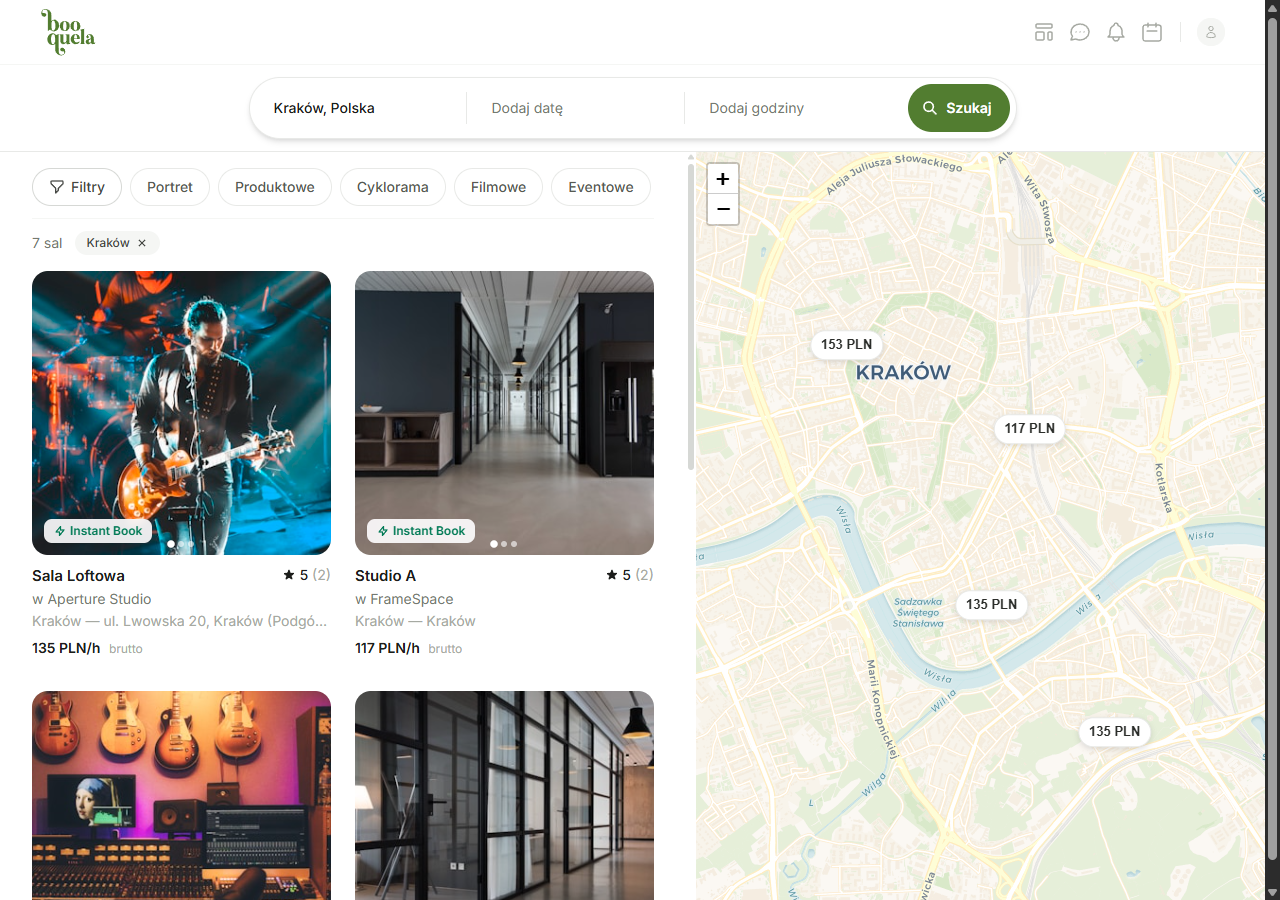
Each card in the search results shows:
- Photos - swipe through them for a quick look at the interior
- Rating and number of reviews - feedback from other creators
- Hourly price - approximate cost
- Category - type of space (photo studio, recording room, etc.)
Click on a card to see the studio's full listing with all rooms, pricing, and availability calendar.
Compare rooms, not just studios
One studio may have several rooms with different setups - for example, a cyclorama room, a natural light room, and a smaller portrait studio. It's worth browsing all rooms in a studio before deciding.
Save your favourites
Found a space you like but not ready to book yet? Click the heart icon to add it to your favourites. You'll find your favourites list in the menu after logging in.
If you're looking for a specific type of space, use filters - they'll save you time browsing results. Read more about filters in the search filters article.
What if there are no results?
If there are no spaces in your city on Booquela yet, try expanding your search to nearby cities. The platform is constantly growing and new studios join regularly.
Do I need to be logged in to search?
No - the search engine is available without logging in. You only need an account when you want to make a booking.
Was this article helpful?
What could we improve?
Thanks! Your feedback will help us improve this article.